
 8 months ago
197
8 months ago
197
An international team of archaeologists are trying to solve a macabre prehistoric mystery - a massacre of women and children that took place almost 3,000 years ago in what is now Serbia.
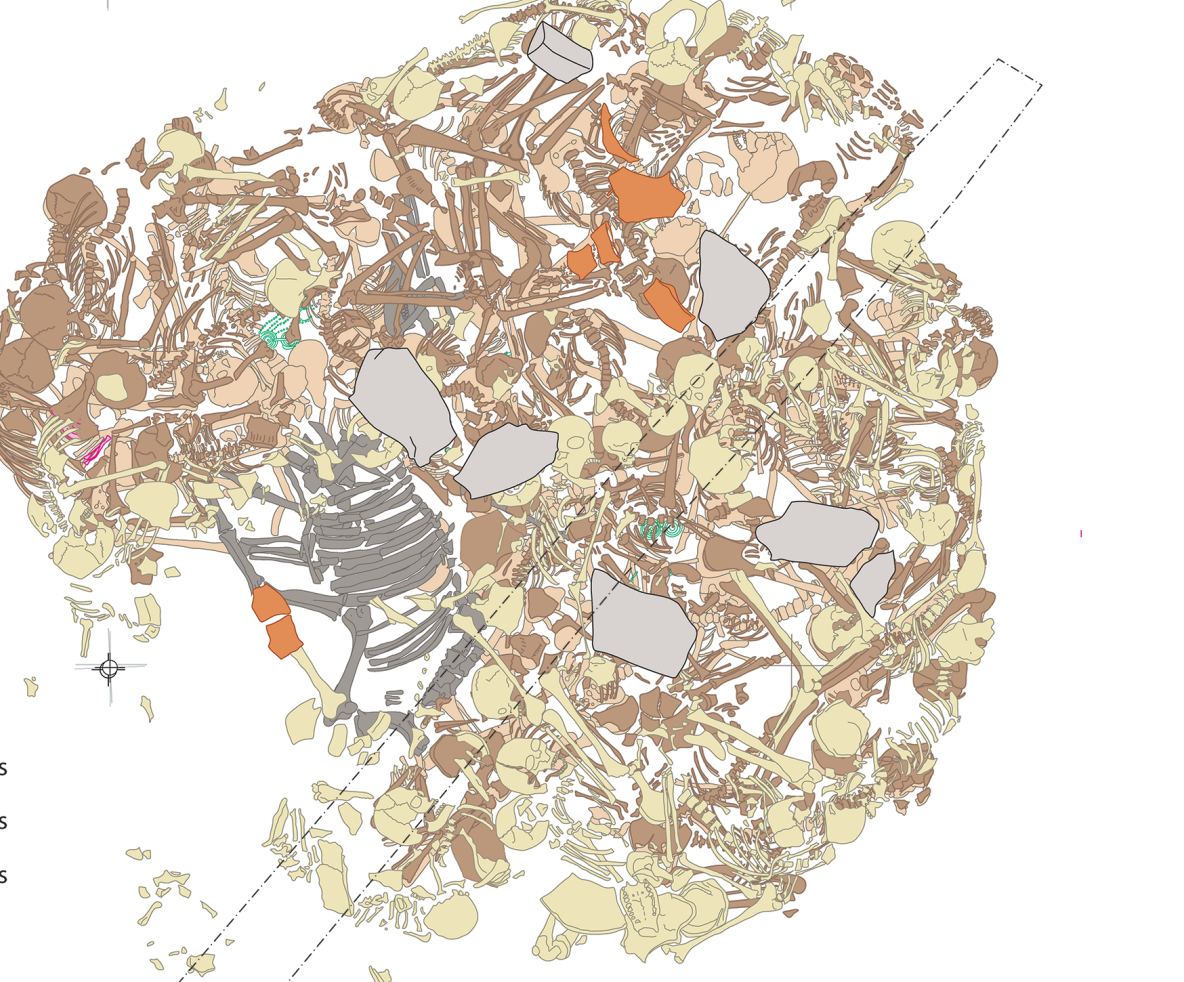
An analysis of the victims’ skeletons, carried out by an Edinburgh University scientist, has revealed that 77 individuals, mainly women and children, were slaughtered and then buried - crammed together in a tiny mass grave, less than three metres in diameter.
The scientific evidence suggests that many were bludgeoned to death with clubs, while others were killed with bladed weapons, probably knives or swords.
Archaeologists, led by a leading Irish prehistorian, have not yet determined the full circumstances of the atrocity, which took place in the mid-9th century BC in an Iron Age settlement.
But isotopic analysis of the bones, carried out in the Netherlands and in Germany (at Leiden and Kiel universities), has revealed that many of the victims were from settlements at least 30 miles away from the area where the massacre took place.
What's more, their corpses had been crammed into a tiny shallow mass grave (with bodies buried on their sides, to save space) - an act which suggests a distinct lack of respect for the victims.
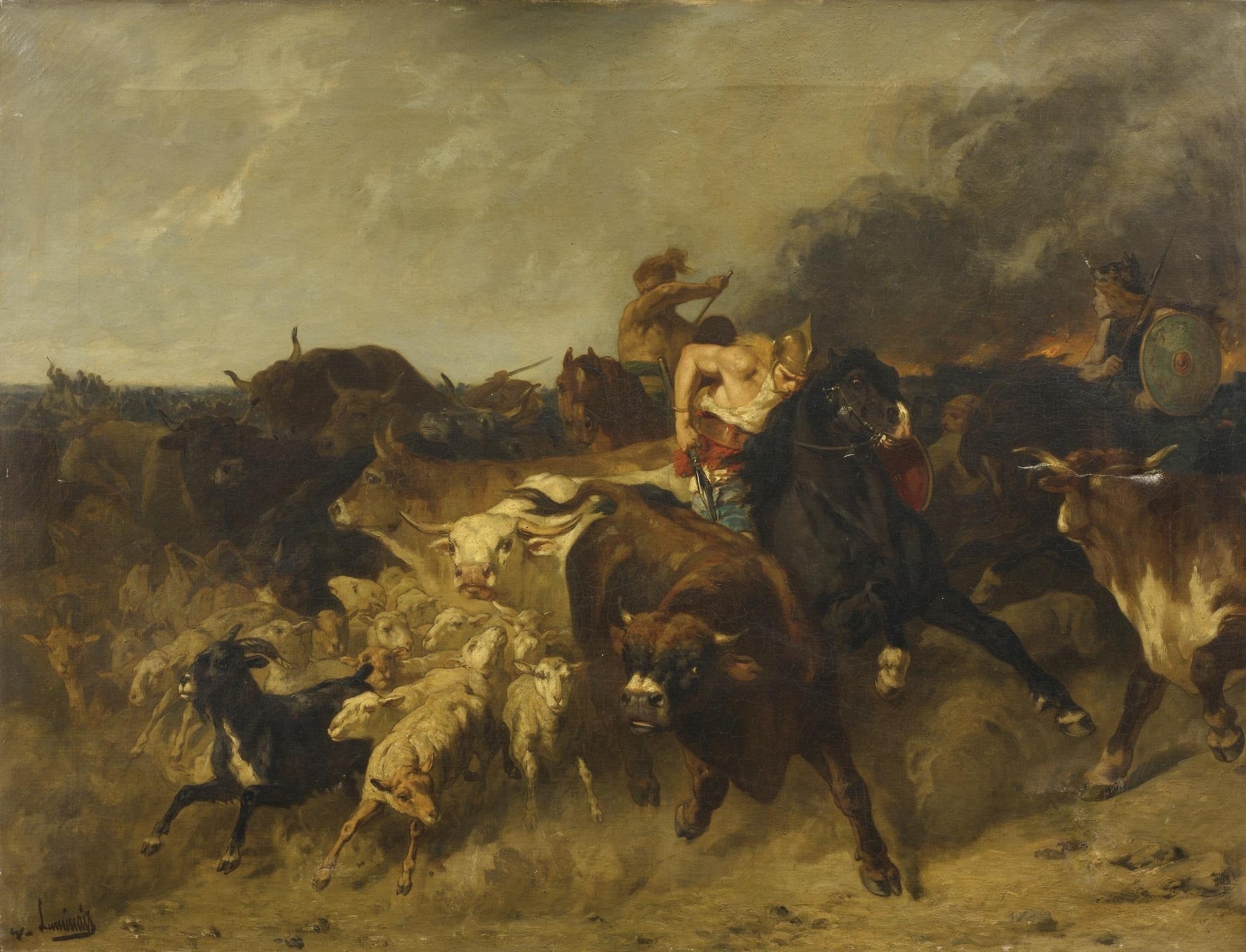
It's also likely that the people burying them did not personally know the victims. Indeed, DNA analysis shows that, in the rare cases where victims were related to each other, children were not interred adjacent to their mothers. Indeed the DNA analysis has revealed that hardly any of the victims were related to each other - and must therefore have come from many different villages and communities.
But, although they weren't accorded proper respect, their Interment was nevertheless carried out in a highly ritualized way.
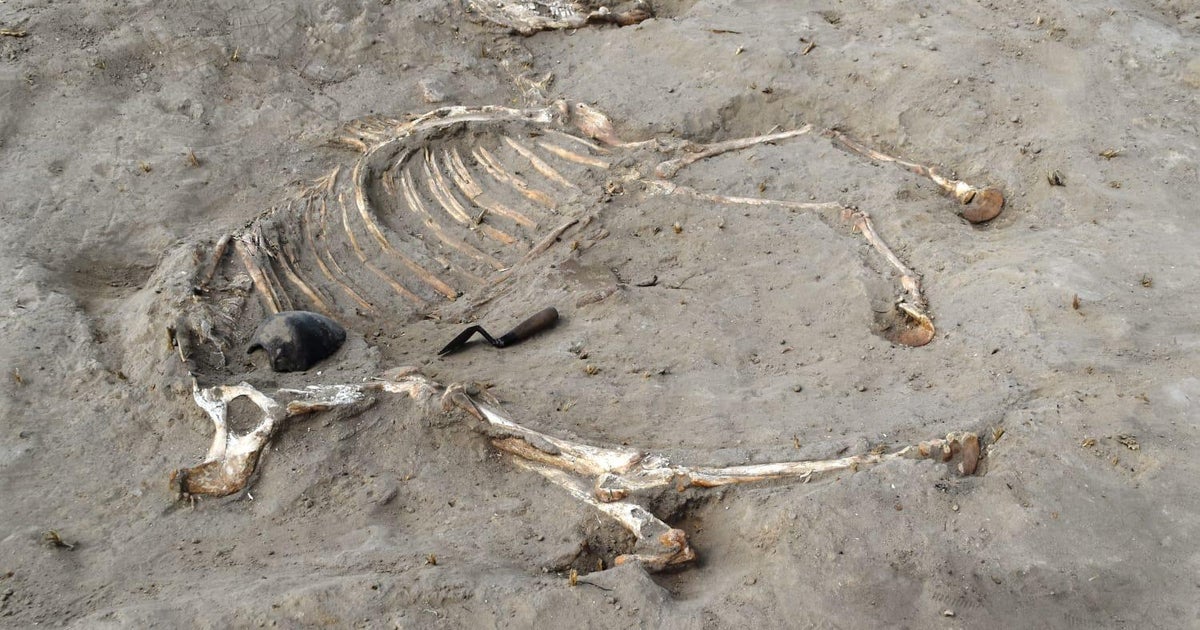
For the human corpses were placed on top of and around a sacrificed young cow – along with more than dozen joints of meat which had come from deer, sheep, cattle and pigs which, like many of the interred humans, had come from some distance away. Indeed an isotopic analysis of the animal bones revealed that they had been fed on food grown in several different environments and localities.
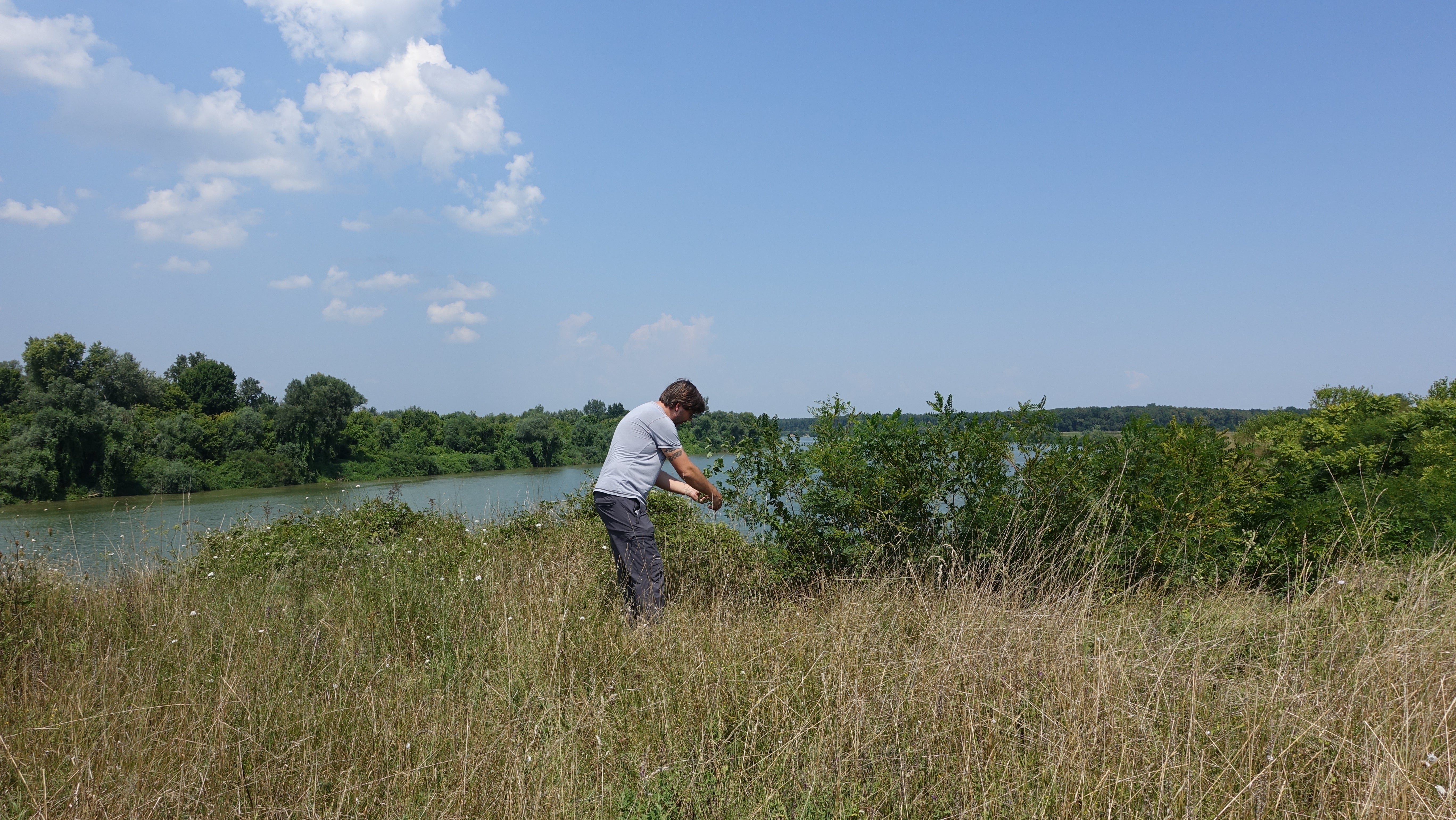
What's more, there was another unusual piece of potentially ritually-relevant evidence in the mass grave - a pile of burnt millet and barley seeds, which had been burnt so thoroughly that they had literally being turned into charcoal.
That is potentially very significant - because ancient eastern European tradition held that the smoke from burnt seeds was able to prevent the dead or their spirits rising from their graves and haunting the living.
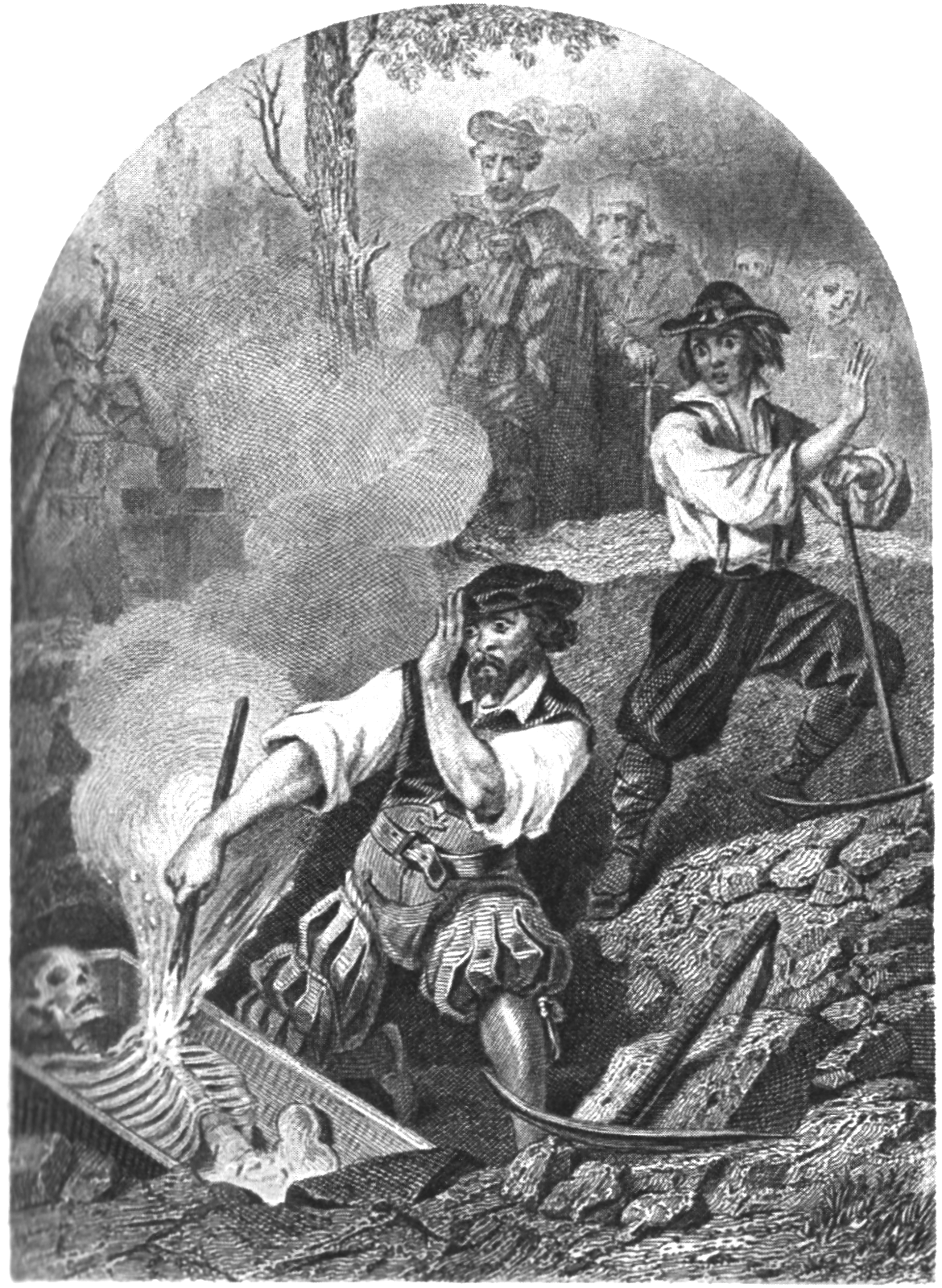
Additionally, at least ten heavy quern stones were symbolically placed on top of the corpses - and it's known that, in ancient times in eastern Europe and elsewhere, stones were indeed placed over any cadavers considered potentially hostile or dangerous.
Those two latter pieces of evidence suggest the possibility that the people who crammed the corpses into their tiny mass grave were frightened of them all - an entirely understandable view if indeed the people interring them were their killers, who may well have been frightened of their victims taking revenge upon them.
But there was one further piece of intriguing evidence. Archaeological investigations have demonstrated that around the time that the ritual interment took place or very soon after, the entire settlement was abandoned. There is no evidence that it was attacked or burnt down - just that, for several centuries, people stopped living there.
.jpeg)
Archaeologists are continuing with their investigations – but one possible explanation for the massacre and the mass grave is that it was a deliberate and gruesome decommissioning ceremony to ritually mark the closure of what may well have been the killers’ settlement. Ritual decommissioning ceremonies were a feature of the prehistoric and ancient world.
Almost certainly the victim's must have come from tribes or clans who the killers considered their rivals and enemies.
In what is now northern Serbia and the surrounding area, the 9th century BC was a period of rapid change in which competition for land appears to have been increasing.
Increased competition between groups may well therefore have been responsible for the atrocity.
But why were women and children targeted. Modern studies of military and paramilitary violence in state and non-state contexts in recent and current conflicts have highlighted how disturbingly common deliberate violence against women and children still is.
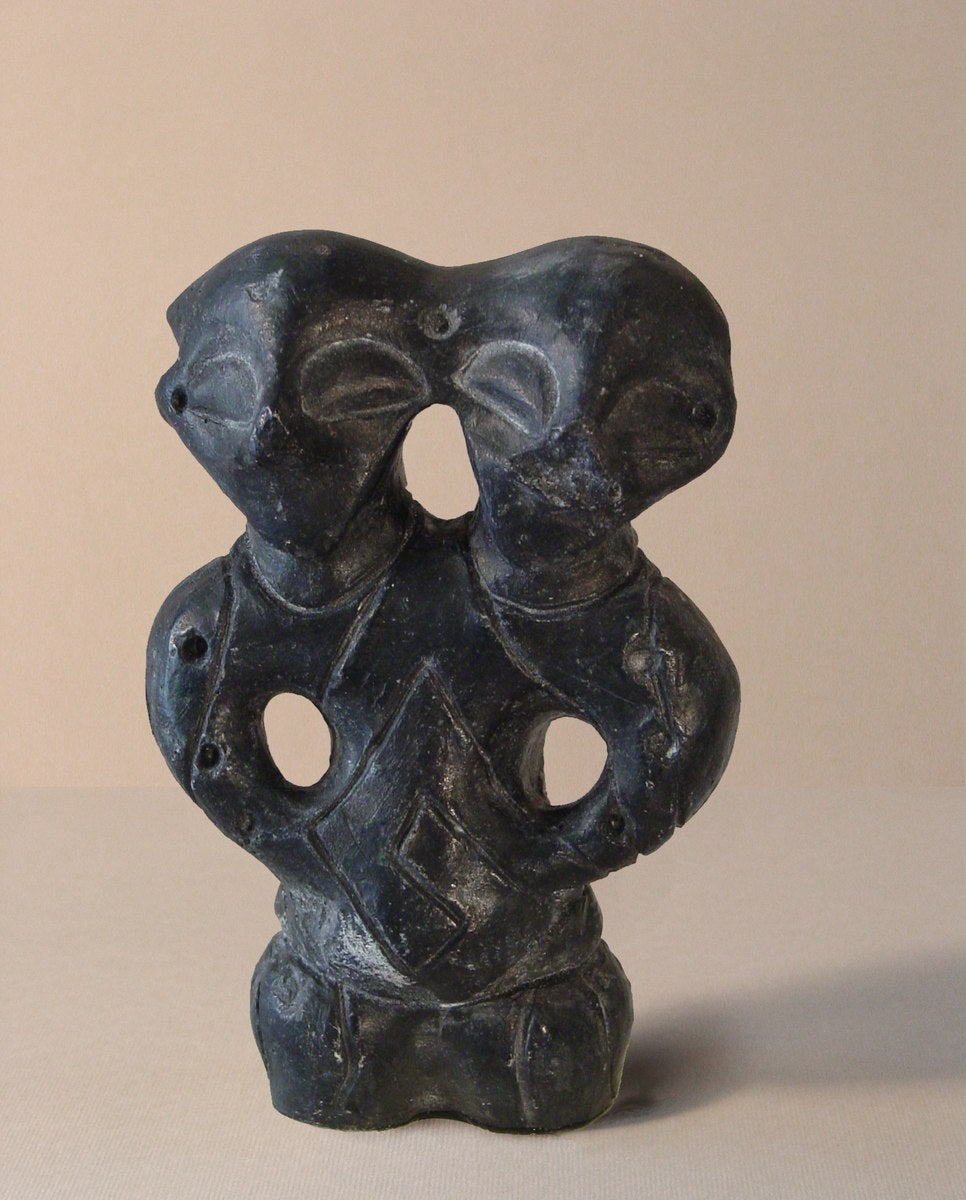
Those modern surveys suggest that such violence is used to dishonour, demoralise and emasculate enemy communities.
Women are also targeted because they are seen as central to family and communal continuity.
And one study by a Harvard political scientist, says that armed groups sometimes encourage and use atrocities (including violence against women) to enhance bonding between the perpetrators.
At least some of those rationales may well have been part of the motivation behind the Iron Age massacre which the Irish, UK-based and other archaeologists have been investigating.
Further archaeological work in and around the site is needed - but the available data suggests that one possibility is that the 77 victims were sacrificed along with the cow and the other animals as part of a blood-soaked decommissioning ritual to mark the killers’ abandonment of their settlement in troubled times.
But only future research will finally crack this most gruesome of European archaeological mysteries.
"Our new research has transformed our understanding of what must have been a traumatic crisis for the community living in the landscapes around this very significant archaeological site. Telling the story of the mass grave deepens our understanding of a recurring, ugly side to human behaviour which still scars our world today," said the leader of the archaeological investigation, University College Dublin archaeologist, Dr Barry Molloy.
Archaeologists and other scientists from University College Dublin, institutions in Serbia and the universities of Edinburgh, Copenhagen, Leiden (in the Netherlands) and Kiel (in Germany) joined forces to investigate the mass grave. The crucial osteological work which revealed how the victim's were killed was carried out by University of Edinburgh osteologist, Dr Linda Fibiger.
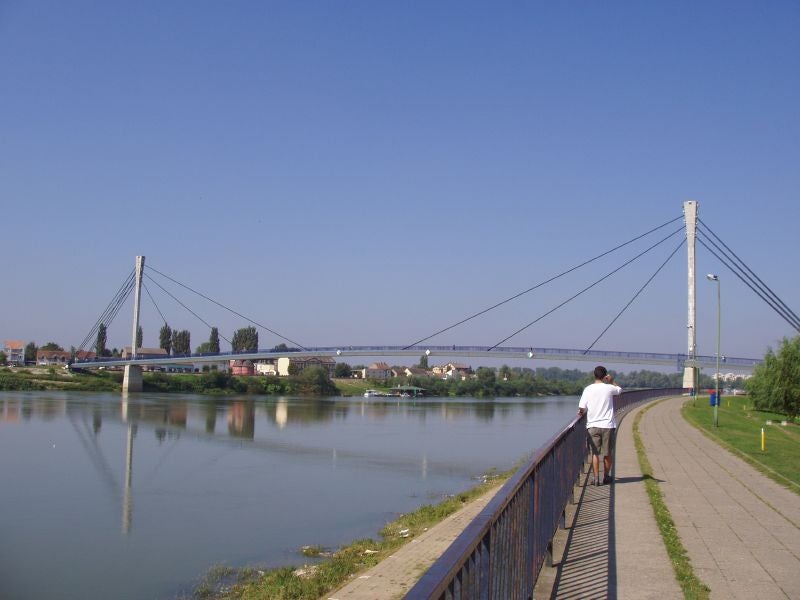
The site, known as Gomolava is located by the side of one of south-east Europe's most important rivers, the Sava. It was inhabited for several thousand years - and had been an important centre of Neolithic culture 4000 years before it was finally abandoned in the Iron Age in around 850 BC.
The new research has just been published by the academic journal, Nature Human Behaviour.











 English (US) ·