
 1 month ago
136
1 month ago
136
Archaeologists have discovered the strange remains of an individual placed deliberately at the bottom of a 2,000-year-old Scottish well, likely as part of an ancient ritual.
The Iron Age well, measuring about 3m (10ft) long and a metre (3ft) deep, was found lined with stone slabs and clay plugging gaps between them.
Researchers from the Highland Archaeology Services found artefacts near the well, which suggest it was built during the Iron Age, likely to hold water, long before it was abandoned and later used for ritual purposes.
The ancient well, according to archaeologists, is characterised by a “slabbed stone floor flanked by large foundation boulders and blocks, which were overlain by several regular horizontal stone courses and steep entrance steps”.
“The bonding of the lower levels of this structure with a viscous, clay-like mortar likely points to its function for holding liquid, and its use as a ritualised well has been suggested,” according to a report published by the Highland Archaeology Services.
Within the well’s internal area, there were several deposits, whose base was used to lay out an “adult human burial”, researchers wrote.
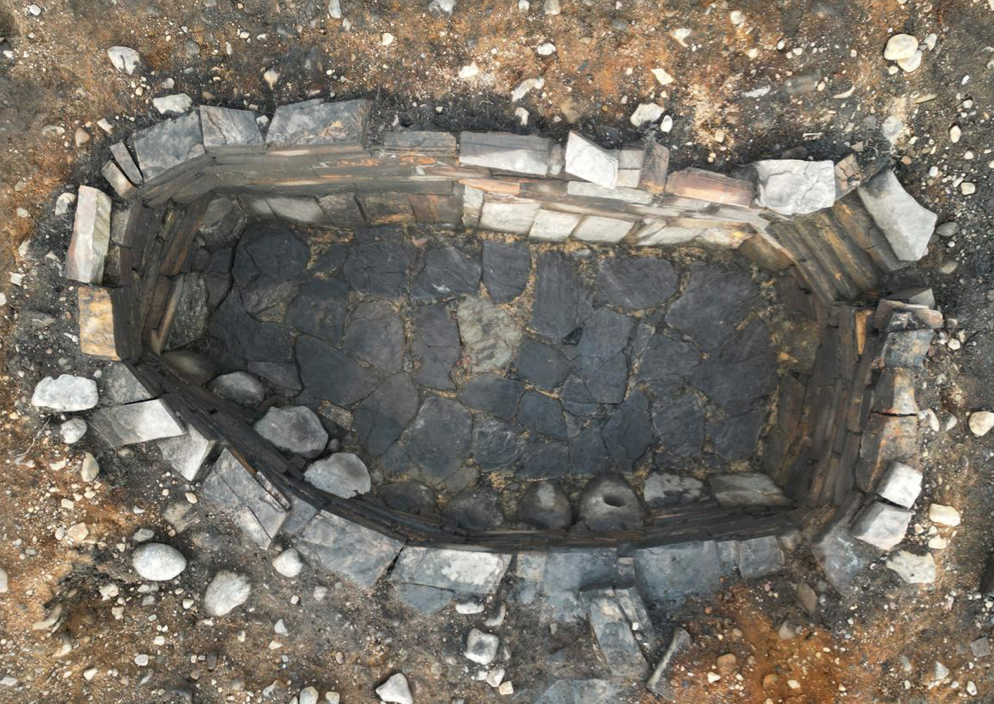
A large quantity of animal bones were also found along with the buried human remains.
The human skeleton was capped by a “charcoal-rich material” that likely points to the well being abandoned, researchers say.
“The apparent blocking of the stepped staircase into the structure appeared to bear this theory out,” they wrote. A shale bangle fragment and a broken steatite bowl found near the well suggest they were from the Iron Age period. Such burials containing artefacts in northern Scotland are usually rare from the Iron Age period, archaeologists say.
Future analysis could confirm the sex and age of the human remains, they say. Researchers suspect the burial was likely part of a ritual conducted when the well was not in use for storing water.
It is located near another Iron Age settlement at Camore Wood, where the remains of at least 20 hut circles were previously found.
The newly discovered well burial may also be surrounded by hut circles, according to a report published earlier this month.
“Additional post-excavation analysis of the human skeleton, material culture, soil samples and ecofacts would add to the understanding of these features and, therefore, a range of further post-excavation analysis work was recommended,” researchers wrote.










 English (US) ·