
 5 months ago
242
5 months ago
242
Inferno, the iconic 14th-century poem by Dante Alighieri widely regarded as a literary masterpiece, may have been inspired by an asteroid impact, according to a groundbreaking new theory.
Inferno is the first part of Dante’s epic The Divine Comedy, which explores themes of sin, moral corruption and divine justice as Dante travels through nine concentric circles of hell, witnessing punishments.
The new theory suggests the masterpiece is likely an imagination of Satan as a high-velocity impactor, like an asteroid, hitting the Southern Hemisphere and tunnelling through to the Earth’s centre.
The impact forces the Northern Hemisphere to retreat significantly, causing it to form the core of hell as a bottom-up crater.
The earth displaced by the impactor, meanwhile, creates the mountain of Purgatory, according to the new research presented at the European Geosciences Union General Assembly 2026 in Vienna.
The event envisioned in the poem appears to parallel the Chicxulub asteroid collision which ended the reign of the dinosaurs, according to the theory.
Similar to Chicxulub impact, Satan’s arrival in the epic follows a planetary chain reaction, tunnelling to the core and generating the central peak of Mount Purgatory.
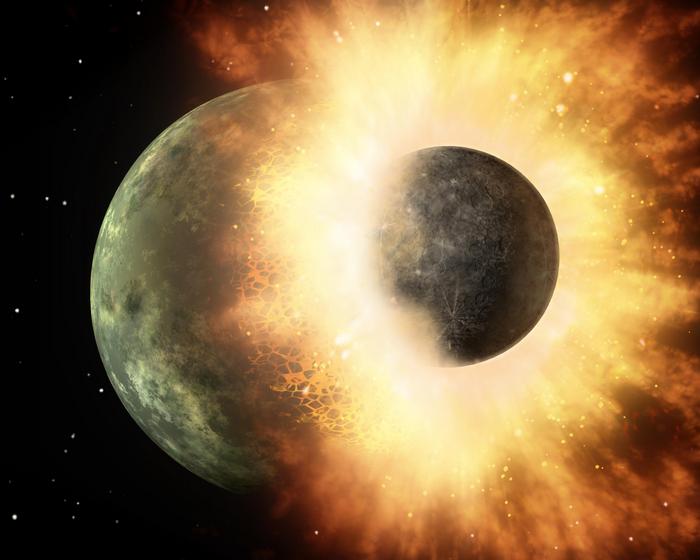
English professor Timothy Burbery of Marshall University says the epic treats Satan as an oblong, asteroid-sized body, reminiscent of the interstellar object Oumuamua, whose arrival followed the harrowing logic of a global extinction event.
Dante’s Satan, he says, is modelled as a physical, unvaporised asteroid that permanently restructured the Earth’s architecture.
The nine circles of hell are not merely symbolism, but could be a description of the concentric morphology found in asteroid impact basins across the solar system, from the Moon to Venus.
Dante seems to have intuitively mapped the physics required for a massive object to reach maximum compression at the Earth’s core, the professor says.
“Although Dante was not a scientist, he was one of the first persons in history to think through the physical effects of a large mass slamming into the earth at high speed,” he says.
The latest theory suggests that mythology raised awareness of physical threats to the planet long before the scientific formalisation of asteroid impacts.
“In Dante’s vision, the devil’s size and velocity are such that when he lands, he instantly creates hell, a massive, circular, terraced crater that reaches to the centre of the earth,” according to Prof Burbery.
“The modern study of meteors was not firmly established until the 19th century. Prior to this point, meteors were seen as merely atmospheric phenomena and were not connected to rocks falling from the sky.”









 English (US) ·