
 5 months ago
219
5 months ago
219
A humanoid robot is now rallying tennis shots with a human in real time. It runs without a script or remote control, so it can react instantly on a tennis court.
The robot stands about 4 feet tall, giving it a compact, human-like frame. Galbot Robotics released a video showing its robot going shot-for-shot with a human player. The system behind it is called LATENT and runs on the Unitree G1.
And it is not just returning the ball. It is moving, adjusting and competing during live play.
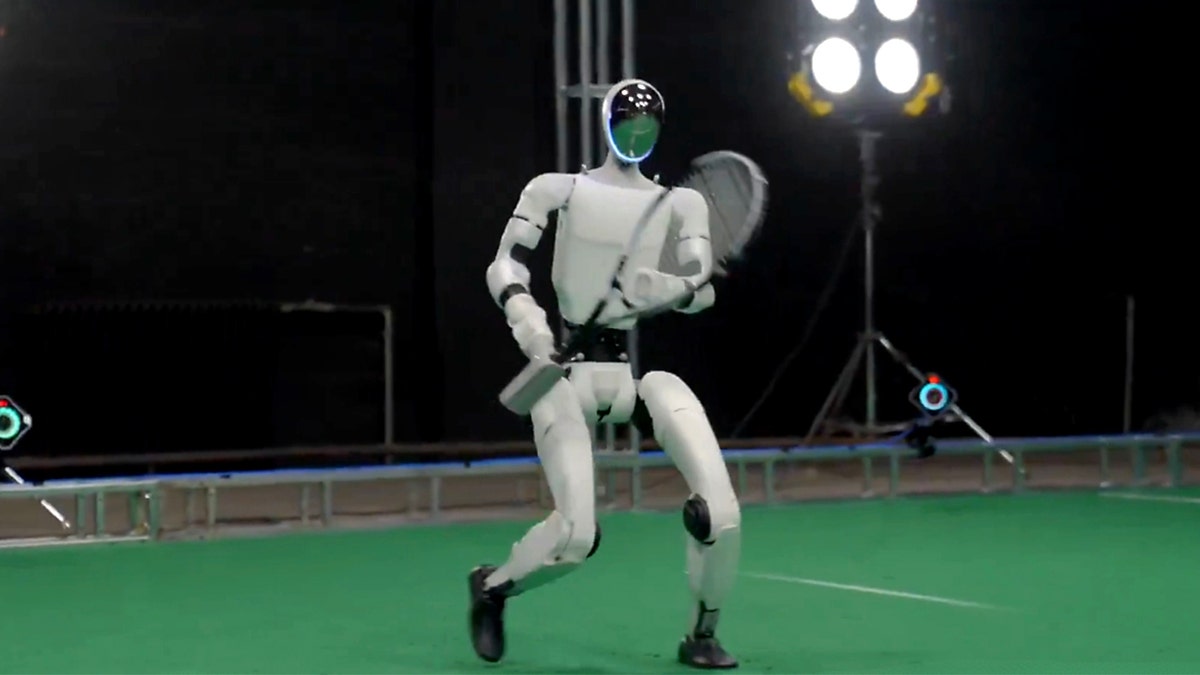
A humanoid robot rallies tennis shots with a human in real time, reacting without scripts or remote control during live play. (Galbot Robotics)
Why this tennis robot is different from others
Most athletic robots you have seen follow scripts. They perform pre-programmed actions or rely on a remote control. This one operates differently. It reacts to a human opponent in real time, tracking fast-moving balls, shifting across the court and returning shots with surprising accuracy. It also adjusts to changing trajectories and unpredictable shots during rallies. Researchers say it can sustain long rallies with millisecond-level reactions and full-body coordination. That marks a major step forward.
How the AI learned to play tennis
Training a robot to play tennis is extremely complex. Tennis involves:
- Tennis ball speeds can reach up to 67 miles per hour
- Split-second racket contact
- Constant movement across a large court
Capturing complete human gameplay data is difficult. So the researchers used a different method.
Training the robot using motion fragments
Instead of recording full matches, they focused on small segments of movement:
- Forehands
- Backhands
- Side steps
They gathered about five hours of motion data from five players. The sessions took place on a compact 10-by-16-foot court. That space is more than 17 times smaller than a standard tennis court.
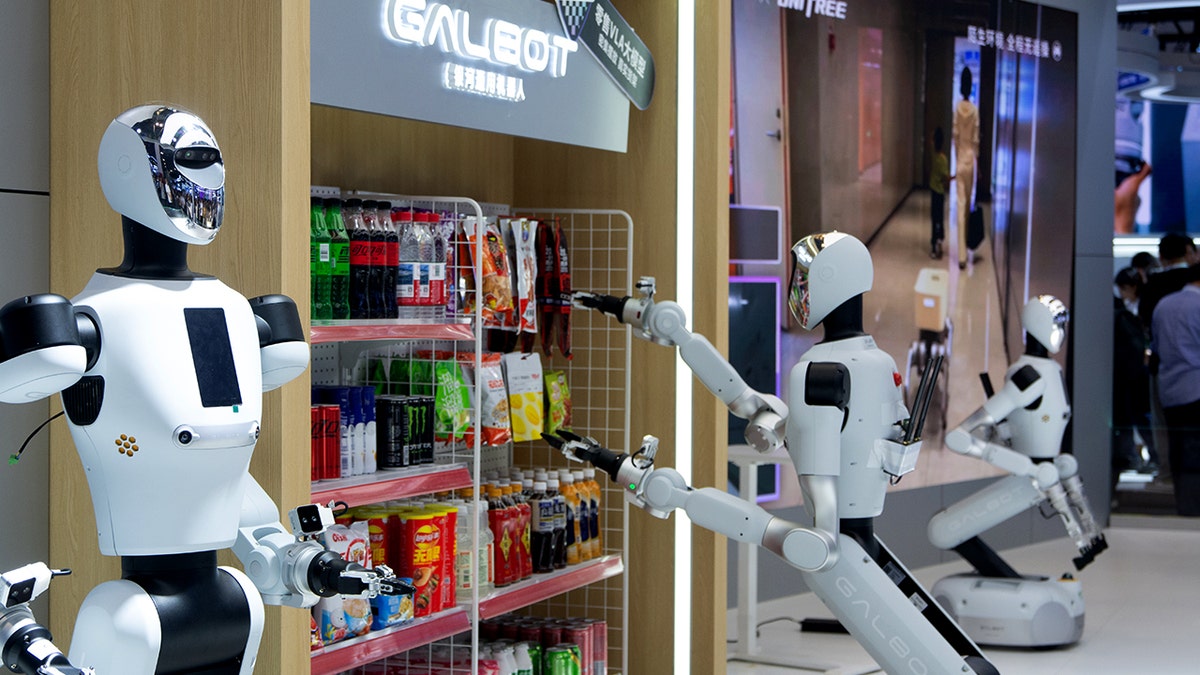
Humanoid robots designed by Galbot Robotics select items from a shelf at the Shanghai New Expo Center in Shanghai, China, on July 26, 2025. Galbot Robotics also designed the tennis-playing robot that learns movement fragments and applies them in live competition. (Ying Tang/NurPhoto via Getty Images)
How the robot plays tennis during live rallies
The system first learns individual movements. Then it combines them into coordinated sequences. That allows the robot to:
- Move toward the ball
- Strike it with control
- Recover and reposition
To improve performance, the team trained the model in simulation. They varied physical conditions such as mass, friction and aerodynamics. This helps the robot adapt to real-world unpredictability. As a result, the system responds dynamically instead of following a fixed routine.
How well does it actually perform against humans?
In testing, the system achieved up to 96% success on forehand shots in simulation. In real-world trials, the robot can sustain rallies with a human and consistently return the ball across the net.
Watching the demo, it appears competitive. At times, the robot places shots away from the human player. That suggests more than a simple reaction. It points toward early forms of decision-making.
There are still limits. The robot can look unstable at times. Its motion is not yet as fluid as a trained athlete. High or unpredictable shots may still present challenges. Even so, the progress is clear.
Why this matters beyond tennis
This breakthrough goes far beyond tennis. It shows how robots can learn complex human skills without perfect data. The same approach could apply to:
- Football
- Badminton
- Industrial work
- Search and rescue
Any task that lacks complete motion data could benefit from this method. That is the bigger picture
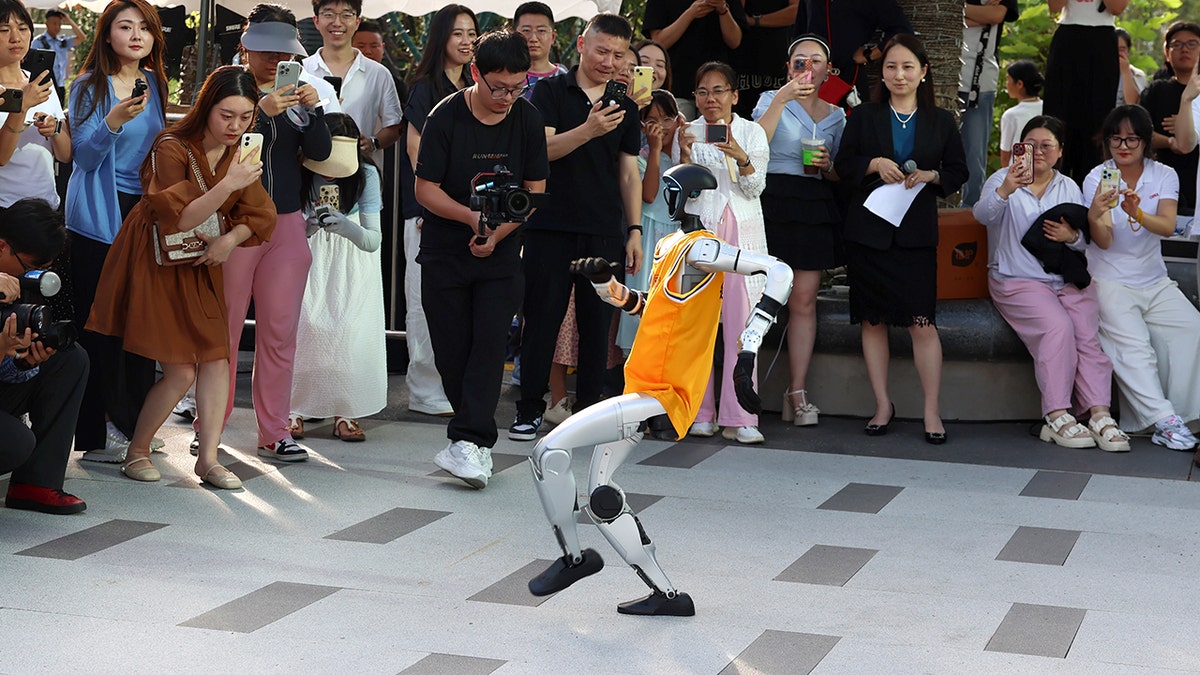
A robot dances at the launch ceremony of a Galbot Robotics retail store in Beijing, China, on August 7, 2025. The company has also designed a 4-foot robot that returns tennis shots with millisecond reactions and full-body coordination. (VCG/VCG via Getty Images)
Could robots compete with humans one day?
The path forward is becoming clearer. Today, the robot rallies. Next, it competes. In time, robots could train with or challenge professional athletes. Exhibition matches between humans and machines may become part of the sport. That future no longer feels far away.
Key takeaways
This demo shows how quickly things are changing. Robots are no longer stuck following scripts. They can now react, adjust and compete in real situations. What used to feel far off is starting to show up right in front of us.









 English (US) ·