 1 hour ago
43
The Saudi national accused of planting a recording device in an executive conference room at OpenAI's headquarters was ordered detained without bail pending trial Monday by a San Francisco federal judge who said that there is a "significant" risk he would flee.
The order came at a court hearing where Judge Alex Tse sharply questioned the value of an offer by the Saudi Consulate in Los Angeles to pay the full bail for Abdulrahman Alfozan, 35, who was working for OpenAI as an engineer when he allegedly planted the device in a television on Sept. 28.
Tse said he found the Saudi offer "problematic."
"It seems like a blank check: 'We're gonna pay whatever the court wants to make sure he gets out," Tse said in the courtroom, as Alfozan and several dozen of his supporters looked on.
"The Saudi government is saying, 'We'll take care of everything, we'll have supervision, we will pay the bond, we're not going to approve any travel documents.'" Tse noted. "But what confidence do I have that they're going to protect the interests of the [U.S.] government?"
"That he's not going to flee? He doesn't have to go all the way to Saudi Arabia," the judge said. "He just has to go to Canada or Mexico ... I don't see how that is in his favor."
Saudi Arabia has no extradition treaty with the United States, which the judge referred to at the hearing. Tse also noted that OpenAI has terminated Alfozan.
Alfozan has been in jail since his arrest on a charge of using or endeavoring to use an electronic, mechanical, or other device to intercept oral communications. He faces a maximum possible sentence of five years in prison if convicted.
Prosecutors from the San Francisco U.S. Attorney's Office during Monday's hearing, and in a detention memo, detailed Alfozan's ties to Saudi Arabia as they argued he was a flight risk. Those ties include his wife and their 3-month-old son, who left the United States shortly after his arrest.
Prosecutors in that court filing Sunday said that Alfozan's alleged bugging of the artificial intelligence giant "could pose a danger to the national security of the United States."
The filing says, "OpenAI executives met with government officials" in the company's San Francisco headquarters in the same conference room on days close to when it is alleged Alfozan planted the device.
"This is an ongoing investigation that may yet result in more serious charges," the filing says.
Source: U.S. District Court in San Francisco, U.S. v. Alfozan.
Prosecutors said in the filing that Alfozan has access to "ample resources ... and what appears to be considerable support from a foreign government that has (i) no extradition treaty with the United States; (ii) limitless resources; and (iii) the ability to provide extraordinary travel assistance, including based on similar circumstances in this District," the filing said.
"He has the connections needed not only to flee, but to build a new life in Saudi Arabia. The Court should order the defendant detained pending trial," prosecutors wrote.
Prosecutors in their filing said Alfozan had been "in frequent communications via WhatsApp with a member of the Saudi Royal Family" throughout 2025 and 2026.
Alfozan communicated with the Saudi royal as recently as Oct. 5 — four days before he was arrested, prosecutors said.
Prosecutors did not identify the Saudi royal or say how Alfozan knew that person.
"Among other things, the individual [the royal family member] told the defendant [Alfozan] that an artificial intelligence initiative was being launched in Saudi Arabia and wanted the defendant to join it," the filing says.
"In May 2026, the individual told the defendant, 'Saudi needs you more then [sic] the US!' to which the defendant responded '100,' indicating he agreed," prosecutors wrote.
"The individual repeatedly tried to recruit the defendant and asked when he planned to leave OpenAI," prosecutors wrote. "At the time, the defendant said he wouldn't leave until his stock vested."
The filing does not say the Saudi royal directed Alfozan to install a recording device at OpenAI or steal information from the AI giant.
Alfozan, who lives near the San Francisco airport, is a venture partner at Raed Ventures, a Saudi venture capital firm.
Prince Khalid bin Bader Al Saud, a member of the Saudi royal family, joined Raed as a venture partner in 2025. In their filing, prosecutors did not mention that prince by name, or say that the unidentified royal who communicated with Alfozan had ties to Raed.
Prosecutors in the same filing said the Saudi government and then, shortly afterward, a member of the Saudi military booked separate flights for Alfozan's wife, Lujain Alassaf, and their baby son to fly out of the United States after his Oct. 9 arrest upended plans for the three of them to fly as a family to Saudi Arabia on Oct. 12.
The wife and son flew from San Francisco to Doha, Qatar, on Oct. 10 on a business-class flight paid for by the unidentified member of the Saudi military, the filing said.
Alfozan's lawyer, William Perchik, told Judge Tse that the defendant was willing to put up $1 million in assets to secure his release, in addition to the Saudi Consulate's offer. A letter from the consulate was included in a motion for pretrial release by Perchik.
Pernik had asked Tse to release Alfozan on bail with home detention and GPS monitoring, and a bond co-signed by others, and "supported by the written undertaking of the Consulate General of the Kingdom of Saudi Arabia."
The Saudi embassy in Washington, D.C., has not responded to CNBC's requests for comment on Alfozan since his arrest was announced on Oct. 13.
Pernik, in arguing for Alfozan's release, said the defendant has spent about 15 years in the United States, working at various tech companies, including Meta, and obtaining a master's degree from the University of California, Berkeley in 2025. He is a legal permanent resident of the United States and has applied to become a naturalized citizen.
For his most recent job, as an OpenAI engineer, Alfozan was hired in July 2025 with an annual base salary of $325,000, which was later increased to $385,000, prosecutors said in their filing. He also received a new hire equity grant of $2.2 million in profit-participating units, his lawyer said in a court filing.
Prosecutors in their detention memo said Alfozan had planned to take two months of parental leave after the birth of his son, according to the filing. He and his family were scheduled to fly one-way to Saudi Arabia on Oct. 12.
"On or about September 28, 2026 — about two weeks before their scheduled flight—the defendant inserted a surreptitious audio recording device into a USB port on the back of a television in an executive OpenAI conference room, where the device remained for at least multiple days," the filing by prosecutors said.
The conference room is frequently used for "discussions of highly confidential technical, commercial, and strategic information, including proprietary research, as well as nonpublic information about OpenAI's technical progress and strategic decisions, capabilities, priorities, government engagements, and commercial relationships," the filing said.
The filing also says that after Alfozan's arrest, his iPhone was found to contain photographs dated Sept. 22 to 28 depicting "at least one additional concealed device as well as what appear to be the input/output panels on televisions and other electronic devices in various locations in OpenAI buildings, including another conference room where sensitive meetings frequently occurred."
"The defendant's residence contained several electronic components similar to those in the
customized devices the defendant installed in the OpenAI conference room," the filing said.
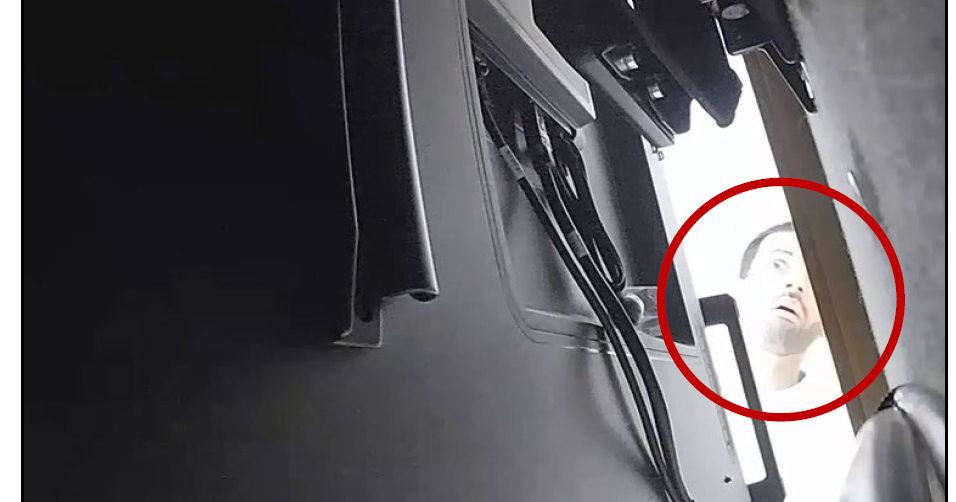
OpenAI also found another recording device in a bag Alfozan inadvertently left behind in a printer room on Oct. 5, the same day he was seen on camera checking behind the TV where the first recording device had been left in the conference room, prosecutors have said. The camera was installed after OpenAI discovered the recording device on Sept. 30, prosecutors said.
His cellphone also contained a deleted note from September "with links to various recording devices, including devices made by Seeed Studio, the manufacturer of the devices OpenAI found in its offices and the devices FBI agents found in the defendant's residence," the filing said.
Another note, entitled "OpenAI leave," suggests that Alfozan planned early pickup "of the devices he had installed or intended to install and then extending his planned parental 'leave to full,'" the filing said.
In addition to being in contact with a Saudi royal, Alfozan "was pursuing other opportunities in Saudi Arabia, including participating in the Misk Foundation's '2030 Leaders' program, which would have required his in- person participation in Riyadh," prosecutors said.
A day before she left the U.S. with their baby, Alfozan's wife told FBI agents who interviewed her that "her U.S. visa was expiring and that she and her son were permanently moving back to Saudi Arabia — and that her husband, the defendant, eventually intended to do the same," the filing said.
Alfozan's lawyer, Pernik, in his request that Alfozan be released into home detention, said, "nationality is not evidence of flight," and that his planned travel to Saudi Arabia was for "family and immigration reasons."
Alfozan's wife's 60-day post-employment grace period for her own visa was expiring on Oct. 12, the originally scheduled date of their flight, the lawyer said.
"Mr. Alfozan was made aware of OpenAI finding the device per its own filings and OpenAI's
public statements, approximately eight to ten days before he was arrested," Pernik wrote. "If his intention was to flee, he would have done so at that time."
The lawyer also said that Alfozan, who had booked a one-way ticket to Saudi Arabia for himself and his family, regularly bought one-way tickets because he has learned they are more cost-effective than changing his flights at the last minute.
Pernik also wrote that the Saudi Consulate General confirmed in writing to the U.S. Pretrial Services Office on Thursday that it "'will not issue any travel documents' to Mr. Alfozan during his release and that, if he requests one, it 'undertakes to promptly notify U.S. Pretrial Services.'"
The attorney argued that prosecutors have not shown that Alfozan is a serious flight risk.
"Mr. Alfozan has lived in the United States for fifteen years and in the Bay Area for roughly ten," Pernik wrote. "Fifty-four people, at least twenty-seven of them in the Bay Area, have written to the Court, and they describe someone who organizes dinners, welcomes newcomers, mentors students, and shows up for friends' weddings, birthdays, and moves."
"That is not the profile of a person with one foot out the door," Pernik said.






 English (US) ·