
 3 weeks ago
172
3 weeks ago
172
A federal judge has ordered Donald Trump’s administration to provide at least 30 days’ notice before making any physical changes to the Kennedy Center — including demolishing it.
The judge responded to a series of court filings on Thursday after the president suggested the memorial to John F. Kennedy could be “ripped down” following a board vote to shutter the institution for repairs after he failed to stamp his name on the building.
The Department of Justice insists that the Kennedy Center is only “temporarily” closing for seven days to address “advanced deterioration,” fueling speculation that the president could try to tear it down altogether.
The venue’s closure may be “extended” after workers “assess existing safety risks in those portions of the main building exhibiting severe structural deterioration,” according to the Justice Department.
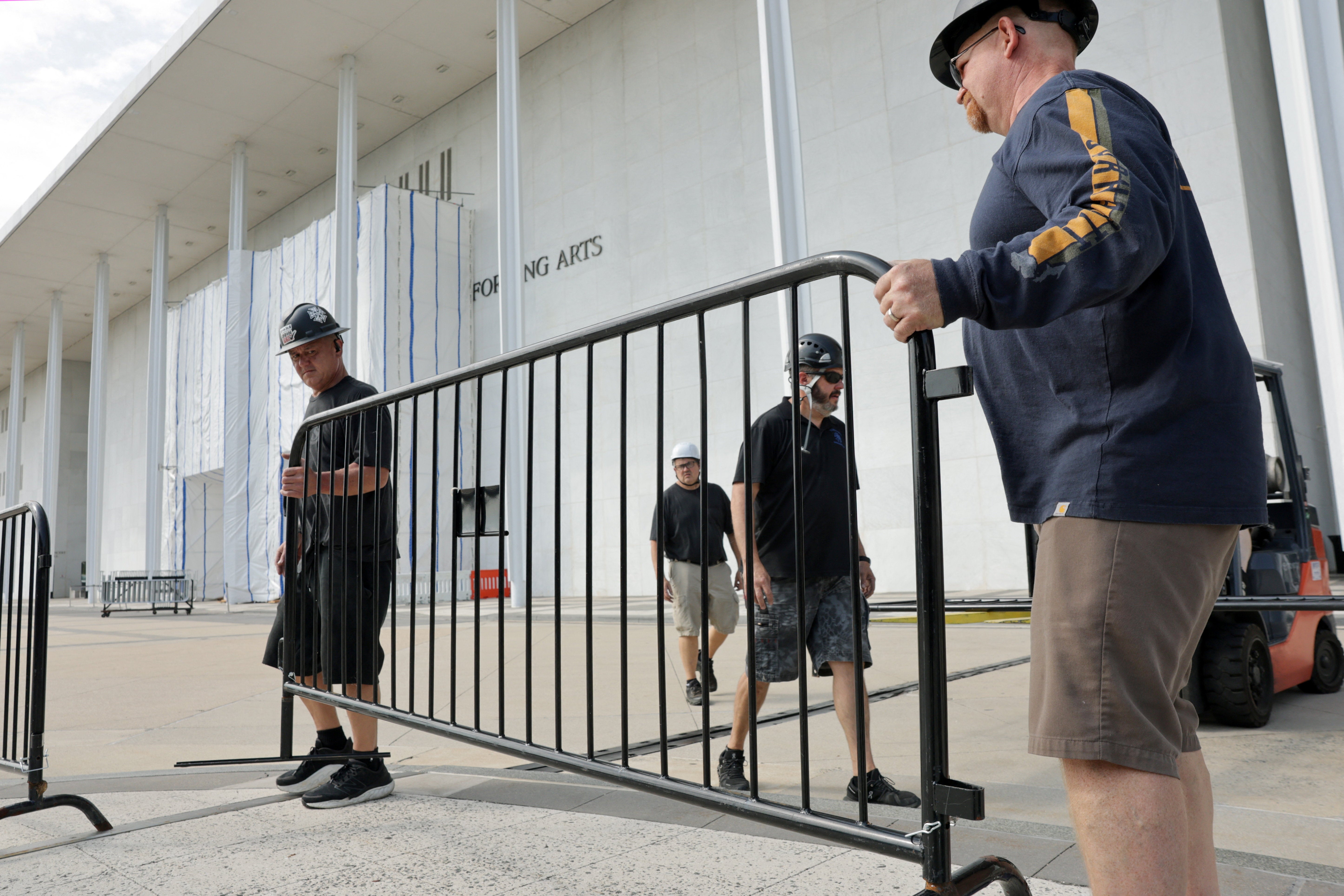
The latest wave of legal filings follow an extraordinary 24 hours for the living memorial to the assassinated former president, as workers installed fencing and orange barricades around the property while Trump publicly mulled whether to demolish the building entirely after courts blocked his attempts to rename it after himself.
Democratic Rep. Joyce Beatty, a Kennedy Center board member who is leading the legal battle against Trump’s efforts, requested an emergency court hearing on the building’s closure, which her legal team says violates an injunction that was issued earlier this year.
She alerted Washington, D.C. Judge Christopher R. Cooper to Trump’s remarks on Wednesday night, telling reporters that the building “will end up being ripped down” unless the president is given “recognition” for his takeover of the memorial.
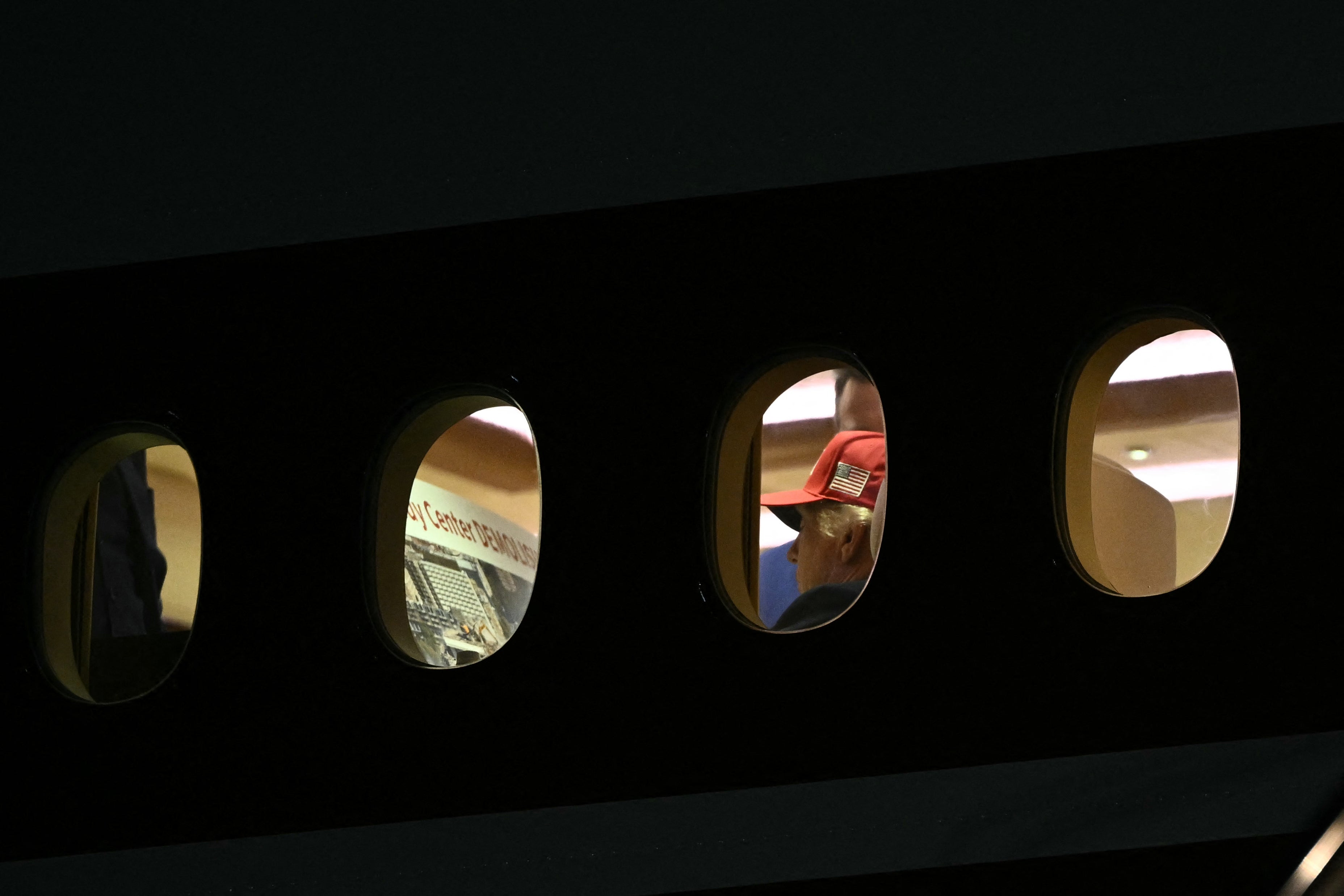
He later appeared to be reviewing a placard reading “Kennedy Center DEMOLISHED” while sitting on Air Force One — images that Beatty’s legal team have now included in court filings.
“Given the emergency nature of this matter and Defendants’ 10 a.m. filing deadline for their response to Plaintiff’s motion, Plaintiff wanted to make sure the Court and Defendants are aware of this new information,” her lawyers wrote.
Judge Cooper denied Beatty’s request for an emergency hearing.
But he clarified that the Kennedy Center must tell the court “if there is any change in the Board’s plans that would constitute a reversal of the Center’s position that the building will not be demolished and that no new structure will be constructed.”
Bill Pulte, Trump’s director of the Federal Housing Finance Agency and former Acting Director of National Intelligence, was aboard Air Force One when AFP photojournalist Brendan Smialowski captured images of the president reviewing the placard.
Pulte did not respond to a text message from The Independent asking for more information about the poster.
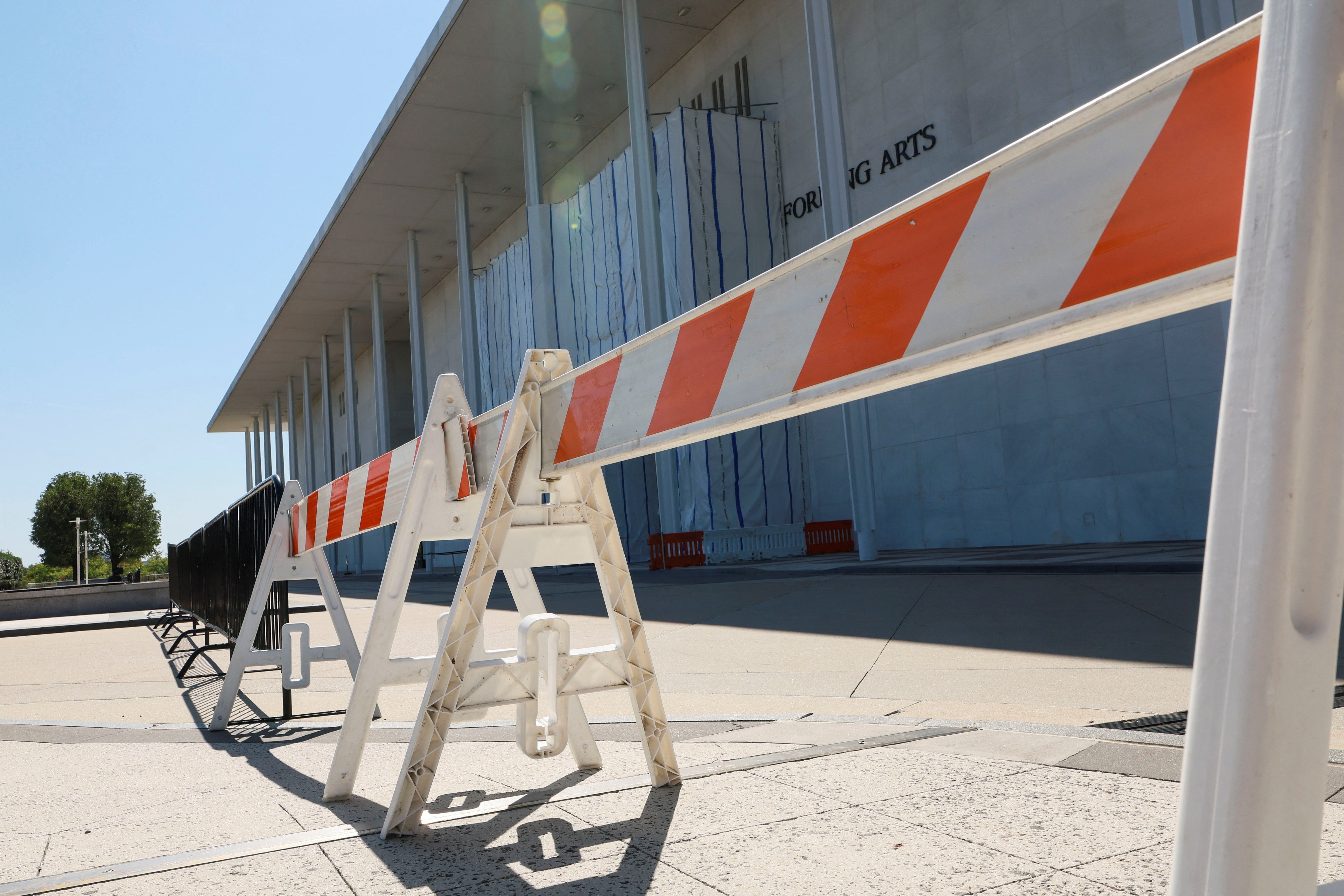
The board’s executive director and chief operating officer decided to temporarily close the Kennedy Center due to “acute risks to public safety resulting from continued structural deterioration” of the building, according to government lawyers.
That decision from Matt Floca was “separate from any Board decision related to closure for ongoing renovations,” lawyers with the Justice Department wrote in court filings Thursday.
Floca also claimed that a message over the Kennedy Center’s speakers telling people to leave stemmed from an improperly triggered alarm.
“I did not authorize that alarm, nor am I aware of a legitimate reason why that alarm may have been triggered,” he wrote in court filings.
Beatty’s legal team said Floca’s explanation for the closure “cannot be squared with the record.”
The Kennedy Center is only temporarily closing the building as “a plain pretext to justify shutting down the Center permanently,” her lawyers wrote in response to the Justice Department’s latest filings.
“It is a recipe for Defendants extending their shutdown forever and closing the Kennedy Center for the next two years — the very thing this Court said they could not do without its permission,” they wrote.
“It goes without saying that demolishing the Kennedy Center’s main building would violate the Court’s preliminary injunction,” they added.
In May, the judge blocked the president from renaming the venue after himself, writing that Congress made it “crystal clear” that the building is only to be named after former President John F. Kennedy, “and it cannot bear any other formal name or public memorial” based on a “unilateral say-so” from a Trump-appointed board.
Last week, Cooper blocked the board from trying to rename the venue after Trump, again, after board members proposed adding “renovated and restored by President Donald J. Trump” to the facade.
“Closing the Kennedy Center without Judge Cooper’s approval appears to directly violate his order. This is an assault on the rule of law,” Beatty’s counsel Norm Eisen of Democracy Defenders Action and Nathaniel Zelinsky of Washington Litigation Group said in a statement Wednesday.
“The board cannot simply ignore Judge Cooper’s rulings whenever it suits them. In this country, no one — including the president — is above the law,” they said.
Last month, after government lawyers repeatedly argued that the performing arts venue is falling into “financial ruin” and rapidly deteriorating in a state of “terminal decline” without Trump at the helm, the Justice Department suggested that it could fall into such extreme disrepair that will require it “to be taken down.
Trump, with his “unrivaled expertise and experience in real estate and construction” and “prominence” as president to raise money for the venue, must be memorialized on the building’s marble facade — or the Kennedy Center will “deteriorate further into an unsafe, decrepit structure that will be required to be taken down,” according to the Justice Department.
“The Kennedy Center is a sacred, living memorial to President Kennedy, not collateral damage in placating Trump’s ego,” Beatty said in a statement shared with The Independent.
“This memorial belongs to the American people, and I will continue to fight on their behalf to block any effort to deface it, shutter it, or demolish it,” she added.







 English (US) ·