
 6 months ago
224
6 months ago
224
Walk into a McDonald's, and you expect a familiar routine. You order, wait and grab your food. At one location in Shanghai, that routine briefly looked very different.
McDonald's deployed robots from Chinese robotics firm Keenon Robotics in one of its fast-food restaurants as part of a short-term test tied to a store opening. The robots greeted customers, added a bit of entertainment and helped with simple service tasks.
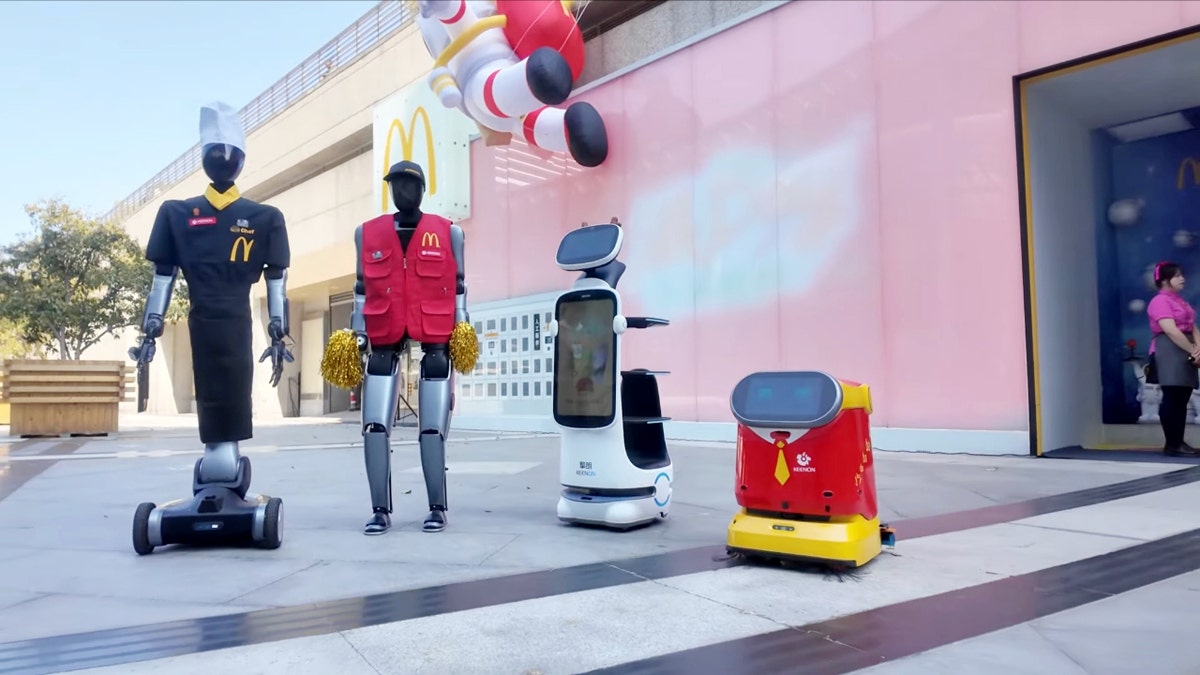
Humanoid and service robots from Keenon Robotics line up outside a McDonald’s in Shanghai, highlighting the mix of experimental machines used in the short-term test. (Keenon Robotics)
What actually happened at this McDonald's in Shanghai
This test happened at just one location. It was not a rollout. It was a short pilot tied to a store opening. Inside the restaurant, humanoid robots greeted customers and added a fun, interactive element. You can see them wearing McDonald's uniforms and making simple gestures for diners. At the same time, other robots handled basic tasks like delivering food and clearing trays. It was a mix of different machines working together, not a fully integrated system.
Human workers still did the real work behind the counter. They handled cooking, orders and anything that required judgment.
In the end, this looked more like a live demo than a real shift in operations. The robots were there to attract attention, not replace staff.
Why McDonald's is experimenting with robots
Even though this was a small test, it reflects a much bigger trend. Restaurants in many regions are dealing with hiring challenges. At the same time, fewer workers are interested in repetitive, lower-paid roles. That creates an opportunity for automation. Robots can handle simple, repetitive tasks with consistency. They do not get tired, and they can operate for long hours. For fast-food chains, that level of reliability is appealing. At this stage, the technology is not advanced enough to replace human workers. But it can support them in limited ways.
Are robot workers the future of fast food?
Not yet. This test was more about exploring possibilities than changing operations. The robots acted more like a demonstration of what could come next rather than a working solution ready for scale. Right now, the most realistic future is a hybrid model. Humans continue to handle cooking, customer issues and complex tasks. Robots assist with basic service and customer-facing roles. That balance could evolve over time as the technology improves.
Why robot tests matter for the future of fast food
Even short-term experiments can signal where things are headed. Robots can speed up service, reduce long-term labor costs and create a unique experience that attracts customers. For families and younger diners, interacting with a robot can turn a routine visit into something memorable. That novelty factor alone makes these tests valuable for companies looking to stand out.
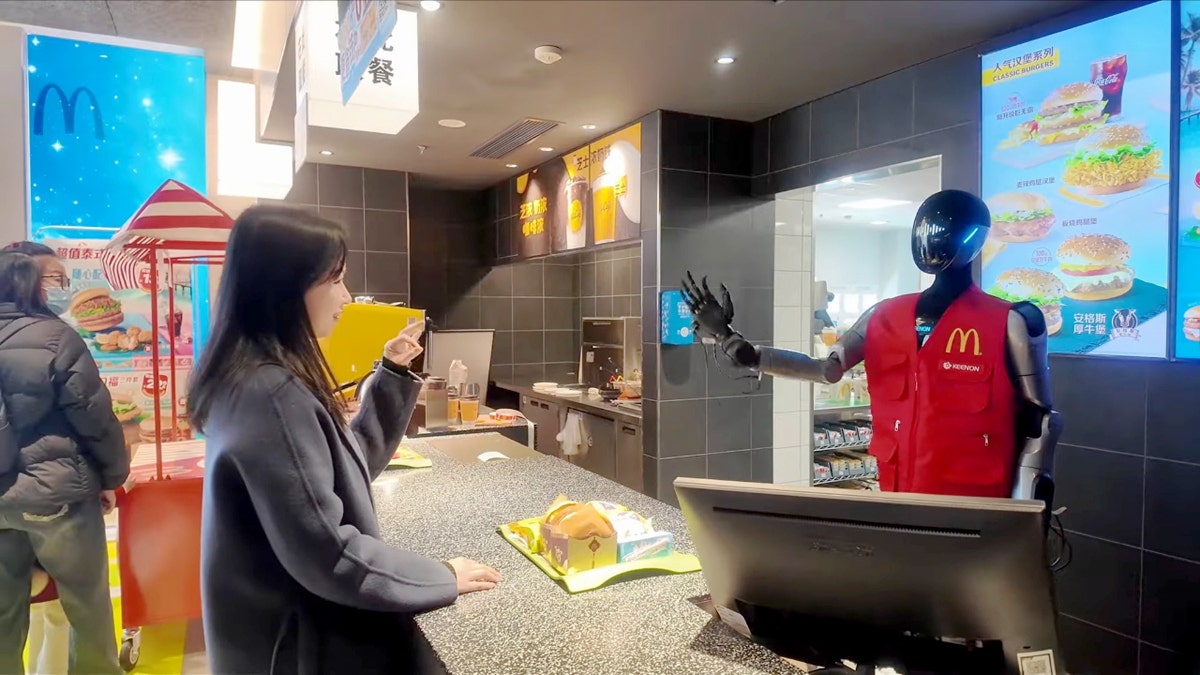
A humanoid robot greets a customer at the counter, showing how the machines were used to create an interactive, front-of-house experience. (Keenon Robotics)
Why fast food automation is still in the early stages
Today's robots are limited. They struggle with complex tasks and unpredictable situations that require human judgment. Cooking, handling special requests and managing busy environments still depend on people. That is why this test remained small and temporary. It shows potential, but it also highlights how far the technology still has to go.
What this means to you
You are not about to walk into a fully automated McDonald's. But you may start seeing more technology in everyday places. That could mean faster service and fewer delays. It could also mean less direct interaction with human staff. Jobs in fast food are unlikely to disappear overnight. Instead, they may shift toward roles that focus on customer support, problem-solving and managing technology. At the same time, these early tests raise questions about how far automation will go and how quickly it could change the workforce.
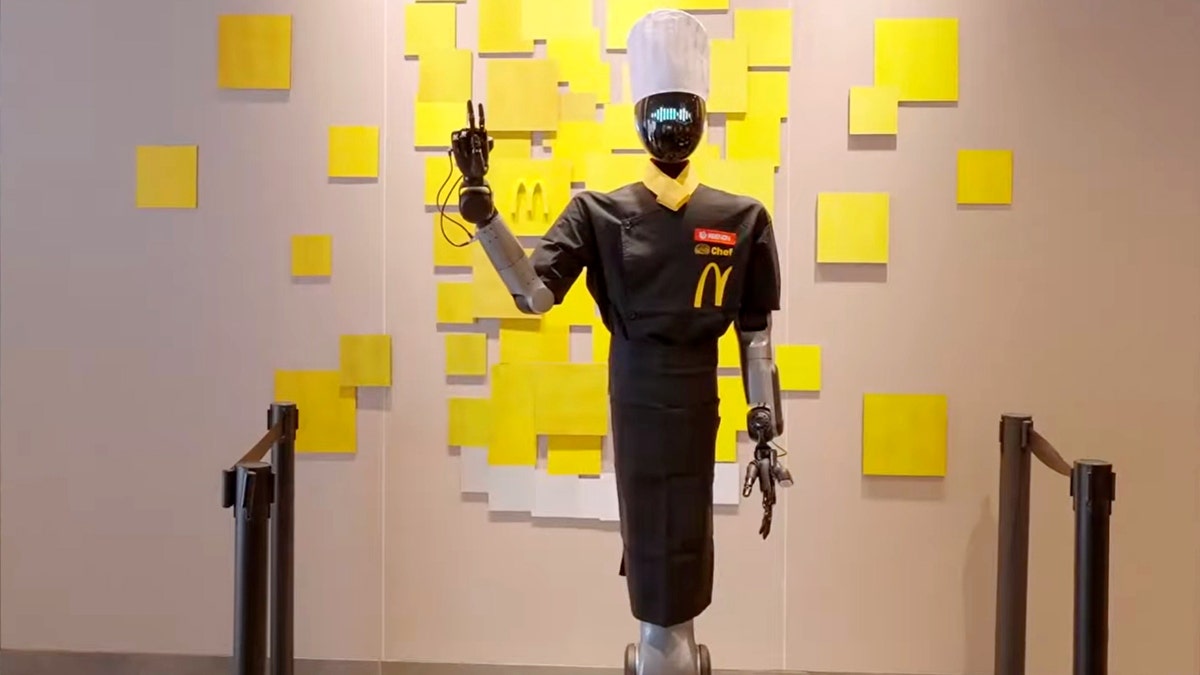
A humanoid robot dressed as a chef stands on display, underscoring how the test leaned more toward demonstration and entertainment than real kitchen operations. (Keenon Robotics)
Key takeaways
This was not a rollout. It was a glimpse. McDonald's used humanoid robots in one location for a short period to test reactions and explore possibilities. The machines added novelty, but they did not replace workers. Still, the direction is clear. Automation is moving into everyday spaces, one small test at a time.










 English (US) ·